
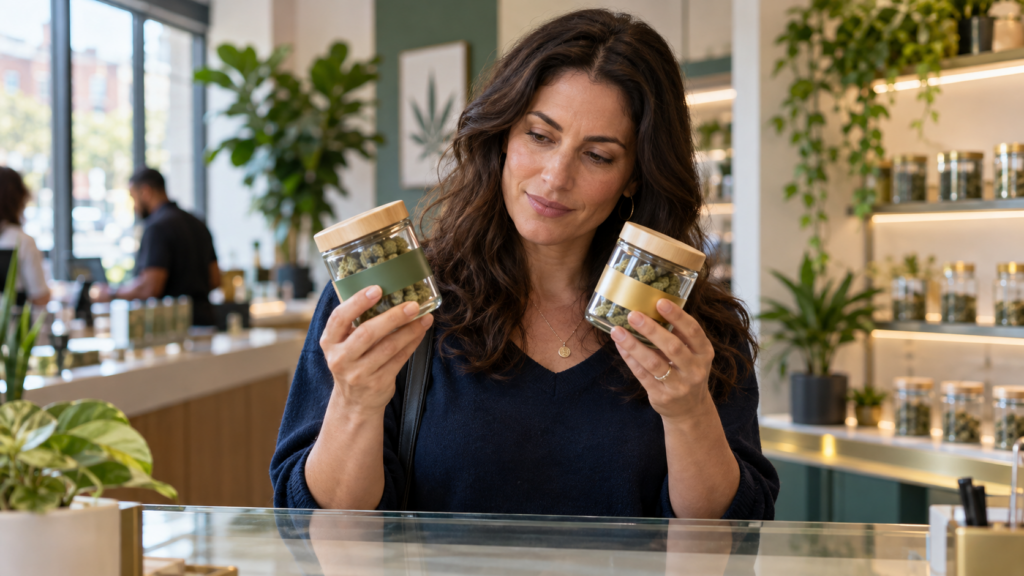
The Difference Between Indica and Sativa Explained
The difference between indica and sativa is not as clear as many menu labels make it seem. The words once helped describe plant traits and origin. Today, they are broad shopping groups. THC, CBD, terpenes, product form, serving size, and personal response often give an adult shopper more useful facts.
Key Takeaways
- Indica and sativa first described types of cannabis plants.
- Years of crossbreeding have made a simple two-group split less exact.
- A category name cannot promise energy, calm, sleep, focus, or any other result.
- Tested potency, product form, serving size, and label details are better comparison tools.
- New York adults should buy licensed products, start low, go slow, and never drive after use.
Where the Two Names Came From
Cannabis plant names have changed over time. Sativa was used for a cultivated type of cannabis. Indica was used for plants linked with another region and set of visible traits. People often describe sativa plants as taller with narrow leaves and indica plants as shorter with wider leaves.
Those old plant traits are part of the difference between indica and sativa. They are useful in plant history and botany. They do not act like a full test of a product sold today.
Modern cannabis has been bred across many family lines. A product may have parents from more than one group. Its label may reflect how a grower, brand, or store places it for shoppers.
This is the first key difference between indica and sativa as plant terms and as store labels.
Why Modern Cannabis Does Not Fit Two Neat Boxes
Crossbreeding can mix plant traits, aroma, cannabinoids, and other features. Many products sold as indica or sativa are not from a single pure family line. Hybrid plants are common, even when a final item is placed in one main menu group.
A large study of commercial cannabis found that labels did not show a clear and steady split in the full chemical data. The commercial cannabis diversity study found that the common labels poorly captured overall chemical variety.
This research helps explain the difference between indica and sativa in modern stores. The words may guide a first look, but they do not show every compound in the package.
What Science Says About Chemical Makeup
Cannabis contains many cannabinoids. Delta-9 THC is the main intoxicating one. CBD does not cause the same high. Minor cannabinoids can also appear in small amounts. Terpenes add scent and are part of the plant’s chemical makeup.
One product marked sativa may have a different THC level and terpene mix from another sativa. The same can happen among indica items. Chemical details can also change from one harvest batch to the next.
Research on cannabis labels and genetic variation found some links between labels and certain terpenes, but it did not turn the names into sure effect groups. The difference between indica and sativa is therefore broader and less exact than a simple active-versus-calm claim.
Why Reported Effects Can Differ
Some shoppers say sativa feels more active. Others say indica feels more calm. These reports are real personal accounts, but they are not a guarantee for the next person.
THC amount, past use, food, setting, other substances, and serving size may change the result. Product form matters too. Flower, vapes, concentrates, and edibles do not all work on the same time line.
The same person may even respond differently on another day. That is why the difference between indica and sativa cannot predict one exact mood, task, or feeling.
A useful difference between indica and sativa guide must make that limit clear.
THC Gives a More Direct Potency Clue
THC information tells a shopper more about intoxicating strength than the category name alone. Check THC per serving and per package when those details apply. For flower, review the tested percentage or amount listed on the package.
A higher number does not mean a product is a better match. It may raise the chance of a strong or unwanted effect. People who are new, returning after a break, or sensitive to THC should use extra care.
The New York consumer information page tells adults to start low and go slow. This advice is more useful than guessing strength from the difference between indica and sativa.
Terpenes Can Add Context
Terpenes help create scent. A label may list myrcene, limonene, pinene, caryophyllene, or other names. Shoppers can use this list to compare one product with another.
Claims about terpene effects are often stronger than the research allows. A terpene name should not be used as a medical claim or sure result. It is one part of a full product profile.
An adult may keep notes about products they tried, including the label, THC, product form, amount, and how they felt. That personal record may be more useful over time than the difference between indica and sativa alone.
Product Form Changes the Time Line
Inhaled cannabis may be felt within minutes. Edibles and drinks may take much longer. New York says an edible can take up to four hours to reach its peak effect. Taking more before then can lead to an unwanted result.
Concentrates and some vape products may contain a high amount of THC. A small amount can still be strong. Read the label before use and follow the package directions.
A sativa edible is not equal to a sativa pre-roll. An indica vape is not equal to indica flower. The difference between indica and sativa should always be viewed beside product form and serving information.
How Terminal 420 Uses the Labels
Terminal 420’s live menu uses common groups to help adults browse. These may include sativa, indica, hybrid, sativa-dominant, or indica-dominant labels when the product information supports them.
Adults can use the Rosedale menu to compare flower, pre-rolls, vapes, concentrates, edibles, beverages, tinctures, and topicals. Stock changes, so use the live page for current choices.
Our staff can explain what is written on a package. We can help compare THC, CBD, product form, and other label facts. We do not promise that a label will cause a set effect.
A Better Way to Compare Products
Begin with the product form. Decide whether you are comparing flower with flower, edibles with edibles, or another like group. Next, check THC, CBD, serving size, ingredients, and directions.
This method puts the difference between indica and sativa in the right place within the choice.
Review the Certificate of Analysis through the package link or QR code. Regulated New York cannabis products include access to this batch lab record. Ask staff to explain a term that is not clear.
Use the difference between indica and sativa as a simple opening question. Make the final choice with facts that can be read and checked.
Use Cannabis Within New York Law
Adult-use cannabis in New York is only for people 21 and older. Adults may possess up to 3 ounces of cannabis and 24 grams of concentrate. A valid government-issued photo ID is needed for a licensed adult-use purchase.
Do not use cannabis in a motor vehicle, even when it is parked. Never drive after use. Keep packages closed and stored away from children and pets. Do not take cannabis across state or country borders.
The New York adult-use guide lists current rules. The difference between indica and sativa does not change any law or safety step.
Common Questions About Indica and Sativa
Is indica a different species from sativa?
The names have been used in plant science in more than one way, and experts do not all use the same classification system. In retail, the words are often broad product groups. Modern crossbreeding means a store label may not map to one pure plant species or family line.
Does sativa have more THC than indica?
Not always. Either group can contain low, medium, or high THC, depending on the product and batch. Read the tested THC amount on the package. Do not use the group name as a measure of strength, quality, safety, or how intense the effect may be.
Why do people still use indica and sativa labels?
The terms are familiar and easy to scan on a menu. They give shoppers a simple place to begin a product talk. Their value is limited, so use them with tested potency, terpene details, product form, serving size, and advice from trained store staff.
What is the main difference between indica and sativa for shoppers?
For shoppers, the main difference is often how a brand or store sorts the product. Indica is commonly linked with calmer words, while sativa is commonly linked with more active words. Those links are not sure results. The full label and a low starting amount are more useful guides.
Compare Products With Better Facts
Use our contact page to plan a Rosedale visit. Adults 21 and older can ask our team to explain the difference between indica and sativa while also reviewing tested label details.